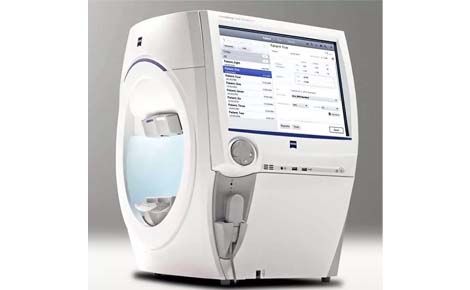
The Humphrey Field Analyzer (HFA) is the gold-standard machine used in ophthalmology and optometry to measure a patient's visual field. It is a vital diagnostic and monitoring tool, primarily for conditions like glaucoma and neurological disorders.

HFA Machine
Overview
Core Function
The HFA performs automated static perimetry tests by projecting a series of white light stimuli of varying intensities within a uniformly illuminated bowl. The patient is instructed to fixate on a central target and press a handheld button whenever they see a light in their peripheral vision. This process assesses the retina's sensitivity (measured in decibels, dB) at specific points, revealing any vision defects or scotomas (blind spots).
Key Features
- Static Perimetry: The primary testing method involves presenting stimuli of a constant size but with varying brightness at fixed locations in the visual field.
- Testing Strategies: The HFA uses efficient algorithms, most notably the SITA (Swedish Interactive Thresholding Algorithm) Standard, Fast, and Faster options, which significantly reduce test time without compromising accuracy.
- Fixation Monitoring: To ensure reliable results, the machine monitors eye movements using methods like the Heijl-Krakau blind spot technique, video eye monitoring, and gaze tracking.
- Data Analysis: Built-in software like STATPAC™ compares patient results to age-matched normative databases. Guided Progression Analysis (GPA) helps doctors identify and track changes in visual field loss over time, which is crucial for managing progressive diseases like glaucoma.
- Modern Innovations (HFA3): The latest models feature innovations such as a SmartTouch™ interface, automatic Liquid Trial Lens™ technology to minimize setup errors, and seamless data integration with other diagnostic devices like the ZEISS CIRRUS™ HD-OCT via the FORUM system.