A lensometer (or lensmeter/vertometer) is an optical device optometrists use to measure eyeglass or contact lens power, finding sphere, cylinder, axis, and prism, plus the optical center, verifying prescriptions, marking uncut lenses, and confirming proper mounting for clear vision. It works by "neutralizing" lens power with internal lenses until a target image focuses, with both manual models (using dials) and automated digital versions (with screens) available, essential for accuracy in optical labs and practices.

Lensometer
Overview
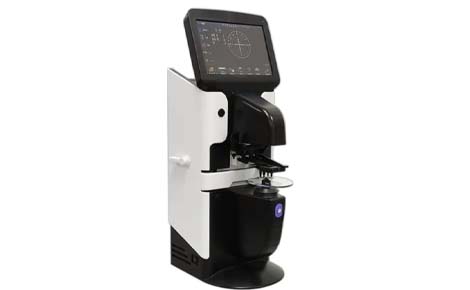
Key Functions:
- Measures Lens Power: Determines spherical (short/long-sightedness) and cylindrical (astigmatism) power.
- Finds Optical Center: Locates the lens's exact center for proper alignment in frames.
- Checks Prism: Measures prism (base-in/out, up/down) for double vision correction.
- Verifies Prescriptions: Confirms finished glasses match the written prescription.
- Marks Lenses: Marks the optical center and axis for cutting.
How it Works (General Principle):
- Lens Placement: An eyeglass or contact lens is placed on the lens holder.
- Focusing: An eyepiece is adjusted until a target (often a grid or crosshairs) is clear, using internal lenses (collimator) to neutralize the lens's power.
- Reading: The power drum is turned until the target lines merge or focus, and readings for sphere, cylinder, and axis are taken from the scales.
- Marking: A marking device is used to pinpoint the optical center and axis on the lens.