A retinoscope is an objective eye exam tool that shines light into the eye to determine refractive errors (nearsightedness, farsightedness, astigmatism) by observing the movement of the light reflex off the retina, without needing patient feedback, making it ideal for infants, children, or uncooperative patients. The examiner notes if the light moves "with" or "against" the scope's movement, then adds lenses until the reflex is neutralized, revealing the necessary prescription for clear vision.

Retinoscope
Overview
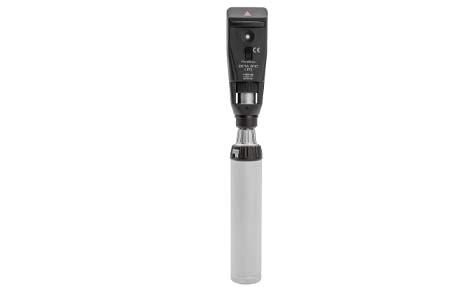
How it Works
- Light Projection: A retinoscope projects a beam of light (spot or streak) into the patient's eye.
- Reflex Observation: The clinician watches the light reflecting off the retina through the pupil.
- Movement Analysis: The speed and direction (with/against) of the moving light reflex indicates the eye's refractive state (e.g., myopia, hyperopia).
- Lens Addition: The examiner places trial lenses in front of the eye until the reflex movement is stopped (neutralized), establishing the objective refractive error.
Key Uses & Benefits
- Objective Measurement: Provides a precise refractive measurement without patient input.
- Pediatrics: Essential for examining infants and young children who can't communicate.
- Special Populations: Useful for illiterate, learning-disabled, or non-verbal individuals.
- Baseline Data: Offers a starting point for subjective refraction.